E-commerce product discovery is moving beyond the traditional model of entering a keyword, scanning search results and opening multiple product pages.
Consumers can now describe what they want in natural language, ask for comparisons, refine their requirements, and request recommendations based on specific constraints.
The experience varies significantly across AI search engines.
A shopper asking, “What are the best running shoes under ₹10,000 for long-distance running?” may receive a different set of products, sources and supporting information on ChatGPT, Perplexity, Gemini or Google AI Overviews.
These differences matter for e-commerce brands because AI visibility is not a single metric. A brand can appear prominently in one AI search experience while receiving little or no visibility in another.
The reason is that these platforms have different search interfaces, product-data ecosystems, retrieval systems and ways of presenting sources.
For brands, the objective is therefore to understand where products are appearing, which sources are being cited, what product information is being used and which queries generate visibility across different AI environments.
How E-commerce Product Discovery Is Changing Across AI Search Engines
Traditional e-commerce search generally starts with a product or category keyword.
For example:
“Best wireless earbuds under ₹5,000”
AI-assisted product discovery can begin with a much more detailed requirement:
“I travel frequently and need wireless earbuds under ₹5,000 with good battery life, comfortable fit for long flights and decent noise cancellation.”
The second query contains several constraints that an AI system can interpret together.
Instead of simply matching the query to pages containing relevant keywords, the experience can involve researching products, comparing attributes and explaining trade-offs.
This shift is already visible across major platforms. OpenAI’s Shopping Research experience can research product information such as price, availability, reviews, specifications and images before producing a personalized buyer’s guide.
Google is also expanding conversational shopping through Gemini and AI-powered Search experiences. Its Shopping Graph brings together product information such as prices, reviews and inventory, which can support product discovery across Google experiences.
From Product Searches to Buying Conversations
The difference can be illustrated with a simple example.
Traditional query:
“Queen size cotton bedsheets”
AI-assisted query:
“I need a queen-size cotton bedsheet for everyday use in a hot climate. Recommend options that are breathable, easy to wash and available in India.”
The second query introduces:
- Product category
- Size
- Material
- Climate
- Usage
- Maintenance preference
- Location
This gives the AI system more context about the shopper’s intent.
For e-commerce brands, this means visibility can extend beyond direct product-name searches. Products may also be discovered through use cases, attributes, problems, preferences and comparisons.
From Search Results to Synthesized Recommendations
AI search experiences can combine information from multiple sources and present it as a synthesized answer.
For example, a product recommendation may include:
- Product name
- Price
- Key specifications
- Customer ratings
- Suitable use cases
- Advantages and limitations
- Retailer information
- Links to supporting sources
ChatGPT’s current Shopping Research experience, for example, can produce buyer’s guides with product comparisons, key differences, trade-offs and merchant links.
This changes what e-commerce brands need to monitor.
Ranking for a keyword is still useful, but it does not fully explain how a brand is represented within AI-assisted product research.
Brands should also ask:
Is my product being mentioned? Which page or source is being cited? What product attributes are being highlighted? Are competitors appearing instead?
ChatGPT for E-commerce Product Research
ChatGPT provides a conversational environment in which shoppers can describe what they need, refine their preferences and compare products.
OpenAI’s Shopping Research experience is specifically designed for more detailed purchasing decisions involving comparisons, trade-offs and multiple constraints. It can ask follow-up questions, research publicly available product information and produce a personalized buyer’s guide.
This makes the platform particularly relevant for product categories where shoppers need to evaluate several attributes before making a decision.
Examples include:
- Smartphones
- Laptops
- Home appliances
- Mattresses
- Beauty products
- Sports equipment
- Furniture
- Kitchen products
How Product Research Works
A shopper can start with a broad requirement and progressively add constraints.
For example:
“Recommend a laptop for graphic design.”
The conversation may then become:
“My budget is ₹80,000.”
“I need at least 16GB RAM.”
“Battery life is more important than gaming performance.”
This creates a different discovery process from a single keyword search.
OpenAI says Shopping Research can incorporate information such as price, availability, reviews, specifications and images, and can adapt its research based on user feedback and changing constraints.
For brands, this means product information needs to be sufficiently detailed to support these kinds of questions.
What Sources Can Matter
ChatGPT’s shopping research can use merchant product data and publicly available product information, including retail sources. OpenAI says the experience reads product pages directly and cites sources used in its research.
This creates several potential sources of product visibility:
- Brand product pages
- Retailer pages
- Marketplace listings
- Product reviews
- Editorial content
- Comparison pages
- Other publicly available product information
The exact sources can vary depending on the query.
For example, a simple question about the price of a product may require different information from a question asking for the best mattress for side sleepers.
This is why brands should not monitor only whether their homepage appears. They should examine which product pages, buying guides, reviews and third-party sources are being surfaced.
What E-commerce Brands Should Monitor
A useful ChatGPT monitoring framework can track:
1. Product mentions
Does the brand’s product appear for relevant commercial and category prompts?
2. Product representation
Which features, benefits and use cases are associated with the product?
3. Source citations
Which brand pages, retailers, publishers or other websites are being cited?
4. Competitor visibility
Which competing products are appearing for the same prompts?
5. Commercial accuracy
Are price, availability, specifications and product variants represented correctly?
6. Query coverage
Does the product appear only for branded searches, or also for category, use-case and comparison queries?
For example, a mattress brand could test:
“Best mattress for side sleepers in India”
“Best firm mattress under ₹30,000”
“Compare Brand A and Brand B mattresses for back support”
“Which mattress is suitable for couples who prefer different firmness levels?”
The objective is not to make ChatGPT return the brand for every prompt. It is to understand where the product is relevant and how accurately it is represented when those queries are asked.
Perplexity for E-commerce Research
Perplexity approaches product research through an answer-and-research experience where sources and citations are highly visible.
A shopper can ask a product question, compare alternatives or research a category, and the response can synthesize information from multiple webpages while linking back to the sources used.
This makes citation visibility particularly important for e-commerce brands. A product may be mentioned in an answer, but the sources supporting that answer can come from the brand’s website, retailers, publishers, review sites or other third-party sources.
Research and Citation-Led Discovery
Consider a shopper searching:
“What are the best noise-cancelling headphones for frequent international travel?”
A research-oriented answer may discuss several products and provide supporting sources for specifications, reviews or product claims.
For a brand, this creates two separate visibility questions:
Is the product mentioned?
and
Which source is being used to support the information about the product?
The second question is particularly important for GEO.
If a brand’s own product page is consistently being cited for specifications and features, that indicates the page is serving as a useful source for the query. If third-party retailers or review publications are being cited instead, those sources may be playing a larger role in how the product is represented.
Citation patterns can therefore reveal content gaps.
For example, if a brand is mentioned for a product but citations repeatedly point to marketplace pages because the brand website does not clearly provide specifications, the brand may have an opportunity to improve its own product information.
Commercial and Comparison Queries
Perplexity can be tested with several types of e-commerce questions:
“Best smartphones under ₹20,000 in India”
“Compare these three running shoes for long-distance running”
“Which Indian brands sell organic cotton bedsheets?”
“What are the differences between these two air purifiers?”
These queries are useful because they test more than branded visibility.
They reveal whether the brand appears when a shopper is:
- Exploring a category
- Evaluating alternatives
- Comparing products
- Looking for a specific use case
- Researching product attributes
Brands should also examine whether the answer accurately describes their products and whether cited sources support those descriptions.
What E-commerce Brands Should Monitor
For Perplexity, brands can track:
- Brand and product mentions
- Citation frequency
- URLs being cited
- Type of cited source
- Product attributes mentioned
- Competitor products appearing
- Accuracy of product information
- Category and comparison query coverage
A useful distinction is between being mentioned and being sourced.
A brand could appear in an answer while a competitor’s website or an independent publication provides most of the supporting information. Monitoring both gives a clearer view of how the brand’s online information ecosystem is being represented.
Gemini for E-commerce Product Discovery
Gemini sits within Google’s broader ecosystem and has a close relationship with Google Search and shopping data.
This creates an important distinction for e-commerce brands: Gemini visibility should be considered alongside the broader Google product ecosystem rather than as an isolated chatbot experience.
Google has been expanding AI-powered shopping experiences using Gemini capabilities and its Shopping Graph. In an April 2026 announcement, Google said its Shopping Graph contained more than 50 billion product listings, with more than 2 billion listings refreshed every hour.
The scale of this product-data ecosystem makes accurate merchant and product information particularly relevant for brands selling online.
Gemini and Google’s Product Data Ecosystem
Google’s shopping ecosystem can process product information such as:
- Product names
- Prices
- Reviews
- Colours
- Availability
- Product attributes
- Merchant information
Google has also been expanding conversational shopping experiences where users can refine what they are looking for rather than simply entering a product keyword.
For example:
“I need a lightweight office chair under ₹15,000 for working eight hours a day.”
The shopper may then refine the request:
“It should have adjustable armrests and good lumbar support.”
This is similar to the broader shift toward conversational product discovery seen across AI search.
For e-commerce brands, it makes accurate product feeds, Merchant Center information, product pages and supporting content increasingly important parts of the visibility ecosystem.
Conversational Shopping and Product Refinement
AI-assisted shopping allows users to move between broad requirements and specific product attributes.
Consider a fashion query:
“I need a formal dress for a summer wedding.”
The shopper could subsequently specify:
- Budget
- Colour
- Length
- Fabric
- Occasion
- Size
The more specific the requirements become, the more important accurate product attributes become.
A brand selling relevant products therefore needs clear information about material, size, colour, dimensions, features, pricing and availability across its product ecosystem.
This does not mean every attribute will automatically make a product appear in Gemini. Rather, complete and consistent product information gives Google’s systems a stronger information base to work with.
What E-commerce Brands Should Monitor
For Gemini and Google’s shopping ecosystem, brands should monitor:
Product attributes: Are the correct features, specifications, colours, sizes and other attributes associated with the product?
Commercial information: Are prices and availability accurate?
Product visibility: Does the brand appear for category and use-case prompts?
Competitor comparisons: Which competing products are presented for similar requirements?
Merchant presence: Is the product information consistently represented across relevant Google merchant and shopping surfaces?
Brands should also watch for differences between their own product pages and the product information appearing in Google’s ecosystem.
For example, if a product page says a chair supports 120 kg but another product feed contains a different specification, that inconsistency can create confusion across search and shopping experiences.
Google AI Overviews for E-commerce
Google AI Overviews are different from standalone conversational platforms because they are integrated directly into Google Search.
A user enters a search query, and Google may display an AI-generated overview above or alongside traditional search results, with links to supporting webpages. Google describes AI Overviews as an AI-powered feature in Search that helps users understand topics and explore supporting web content.
For e-commerce brands, this creates another layer of visibility between the search query and the traditional organic results.
A shopper may therefore encounter:
Search query → AI Overview → supporting webpages → organic results → shopping/product results
rather than moving directly from a keyword to a product listing.
How AI Overviews Differ From Chat Interfaces
The key difference is context.
ChatGPT and Perplexity generally provide a conversational research experience where the user can continue asking questions within the interaction.
Google AI Overviews are embedded within the search journey.
For example, a user might search:
“Best air purifier for a 2BHK apartment”
Google may provide an AI-generated overview that summarizes considerations such as room size, CADR, filter type and noise level, with links to relevant sources.
The user can then continue exploring traditional results, shopping results or additional queries.
This means an e-commerce brand needs to monitor not only whether its product ranks organically but also whether its pages are being surfaced as supporting sources for relevant AI-generated answers.
Commercial Queries and Product Discovery
AI Overviews can be particularly relevant for queries that sit between information and commercial intent.
Examples include:
“Best mattresses for side sleepers”
“Best washing machine for a family of four”
“Cotton vs bamboo bedsheets for summer”
“Best smartphones under ₹20,000”
“How to choose a running shoe for beginners”
Some of these searches have direct purchase intent, while others occur earlier in the buying journey.
This creates opportunities for different types of pages to appear.
A product page may be relevant to a product-specific query.
A category page may be relevant to a broader shopping query.
A buying guide or comparison article may be more relevant to a research-oriented query.
The important point for GEO is to build content around the full customer decision journey, rather than expecting product pages alone to capture every AI-assisted search.
What E-commerce Brands Should Monitor
Brands should track:
- AI Overview presence for priority queries
- Whether their pages are cited or linked
- Which page types receive visibility
- Product and category queries where competitors appear
- Attributes mentioned in AI-generated summaries
- Whether the information presented is accurate
- Changes in organic clicks when AI-generated results appear
Google has also introduced AI performance insights in Merchant Center that provide visibility into how brands and products appear across AI-powered shopping experiences, including AI Mode, AI Overviews and Gemini.
This reinforces the need to treat AI visibility as an additional measurement layer rather than replacing conventional SEO reporting.
ChatGPT vs Perplexity vs Gemini vs AI Overviews: Key Differences
The four platforms can all support product discovery, but the experience and visibility signals are different.
For e-commerce brands, the most useful approach is to evaluate each platform based on how products are discovered, what information is surfaced, which sources are referenced and how the brand is represented.
| Area |
ChatGPT |
Perplexity |
Gemini |
Google AI Overviews |
| Primary experience |
Conversational product research and comparison |
Research and answer discovery with prominent sources |
Conversational AI connected to Google’s ecosystem |
AI-generated layer within Google Search |
| Product research |
Can research products, compare options and refine recommendations |
Can research products and compare information from multiple sources |
Product discovery can connect with Google’s broader shopping ecosystem |
Can summarize shopping and product-related information within Search |
| Source visibility |
Sources can be shown alongside researched information |
Citations are a prominent part of the answer experience |
Sources and links can accompany responses |
Supporting webpages are linked from the AI-generated response |
| Commercial information |
Price, availability, specifications and reviews can be considered during shopping research |
Commercial information can be researched from available sources |
Strong connection with Google’s product and shopping data |
Product and shopping information can appear alongside AI-generated results |
| Query style |
Conversational, preference-led and comparison-heavy |
Research-oriented and source-focused |
Conversational and increasingly shopping-oriented |
Search-driven, ranging from informational to commercial |
| What brands should monitor |
Product mentions, citations, accuracy, competitors and use-case visibility |
Citations, source types, product representation and competitors |
Product attributes, merchant/product visibility and accuracy |
AI Overview presence, cited pages and product/category visibility |
The table should not be interpreted as a ranking of the platforms. Each represents a different search environment, and the same query can produce different results across them.
For example, a brand may have strong visibility for a product comparison in ChatGPT but receive more visibility through a category page or buying guide in Google AI Overviews.
This is why AI visibility should be measured at the platform and query level.
A useful reporting framework could record:
Platform → Query → Brand mentioned → Product mentioned → Source cited → Page cited → Competitors mentioned → Product attributes mentioned
Over time, this creates a clearer picture of where the brand is gaining or losing visibility.
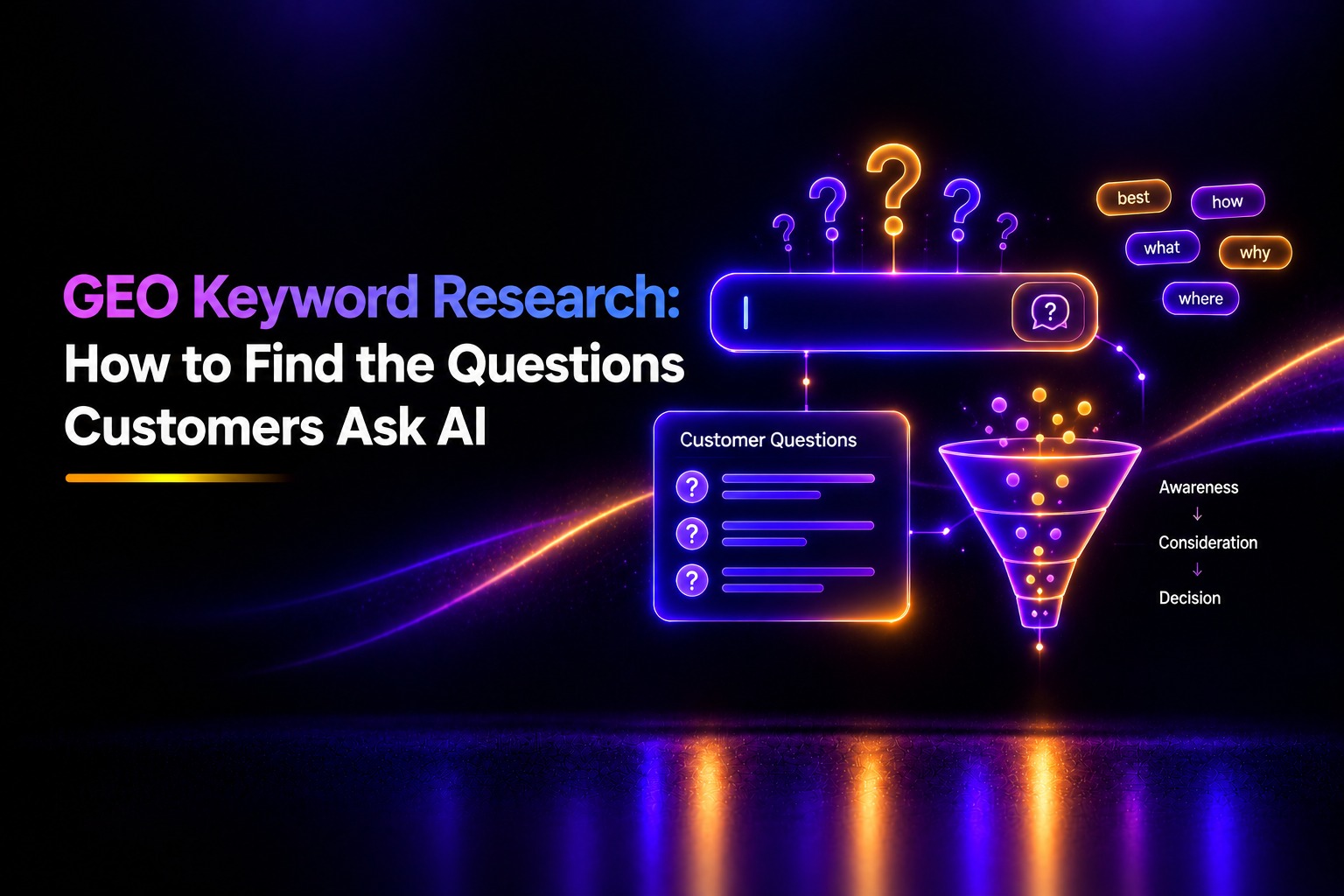
Which Queries Should E-commerce Brands Test Across All Four Platforms?
AI visibility cannot be evaluated effectively using only branded queries.
A brand that appears when someone searches its exact product name may still have limited visibility during category discovery, comparison or problem-solving searches.
A better approach is to build a consistent prompt library covering different stages of the buying journey.
The same or closely equivalent queries can then be tested across ChatGPT, Perplexity, Gemini and Google AI Overviews.
Category Discovery Queries
These test whether the brand appears when shoppers are exploring a product category.
Examples:
“Best smartphones under ₹20,000 in India”
“Best premium cotton bedsheets in India”
“Best ergonomic office chairs under ₹15,000”
These queries are useful for measuring broader non-branded visibility.
Use-Case Queries
Use-case queries introduce a specific customer requirement.
Examples:
“Best mattress for side sleepers”
“Best running shoes for long-distance running”
“Best smartphone for senior citizens under ₹15,000”
A product may be highly relevant to the category but fail to appear when the query includes a particular use case.
This makes use-case visibility an important part of GEO monitoring.
Attribute-Based Queries
These queries focus on specific product characteristics.
Examples:
“Best smartphones under ₹20,000 with a 6000mAh battery”
“Best blackout curtains for bedrooms”
“Best lightweight laptops with 16GB RAM”
They help brands understand whether AI systems associate their products with the attributes they want to be known for.
For example, if a brand’s product has a strong battery capacity but is rarely mentioned for battery-related queries, that can highlight an information or visibility gap.
Comparison Queries
Comparison prompts test how products are represented against competitors.
Examples:
“Brand A vs Brand B smartphones under ₹20,000”
“Compare these three mattresses for side sleepers”
“Which is better for everyday use: cotton or bamboo bedsheets?”
Brands should record not only which product is mentioned but also how the comparison is framed.
Are the correct specifications being used?
Are the prices current?
Are product limitations represented accurately?
Which sources support the comparison?
Problem/Solution Queries
These queries represent situations where shoppers know their problem but may not know which product they need.
Examples:
“How can I choose a mattress if I wake up with back discomfort?”
“Which type of curtain is best for blocking afternoon sunlight?”
“What should I look for in a phone for an elderly parent?”
These queries can surface educational content, buying guides, category pages or products depending on the platform and query.
They are particularly useful for identifying content opportunities beyond conventional product keywords.
Brand-Specific Queries
Finally, test queries where the shopper already knows the brand.
Examples:
“What are the best products from Brand X for summer?”
“Which Brand X mattress is suitable for side sleepers?”
“What are the main differences between Brand X Model A and Model B?”
These queries help identify whether the brand’s own product information is being represented accurately.
Testing branded and non-branded queries together is important because brand awareness and category-level AI visibility are different things.
How to Monitor AI Visibility Across Platforms
A useful AI visibility programme should turn individual AI responses into structured data that can be monitored over time.
The objective is not to manually search hundreds of random prompts and make subjective observations. Instead, create a repeatable testing framework.
Build a Consistent Prompt Set
Start with a fixed set of priority queries.
For example, an e-commerce mattress brand could maintain:
| Query Type |
Example |
| Category |
Best mattresses in India |
| Use case |
Best mattress for side sleepers |
| Budget |
Best mattress under ₹30,000 |
| Attribute |
Best firm mattress with good cooling |
| Comparison |
Brand A vs Brand B mattress |
| Problem |
Mattress for couples with different firmness preferences |
| Brand |
Best Brand A mattress for side sleepers |
Run the same prompt set periodically across the selected platforms.
This makes it easier to identify changes rather than relying on one-off observations.
Track Sources and Citations
For every response, record the sources being referenced.
The source could be:
- Brand product page
- Brand category page
- Brand blog
- Marketplace
- Retailer
- Publisher
- Review website
- Comparison website
- Other third-party source
This distinction is important.
Suppose a brand’s product is mentioned frequently, but the supporting citations consistently come from Amazon, a publisher or a comparison website.
That may indicate that third-party sources are providing more of the accessible product information than the brand’s own website.
Conversely, if the brand’s PDPs and buying guides are regularly cited, those pages may be serving as useful sources for the queries being tested.
Track Product Representation
Citation tracking alone is not enough.
Brands should record what the AI system actually says about the product.
If the product is consistently described using the wrong features, outdated price or incorrect use case, the brand should investigate the underlying information sources.
The monitoring process should also record competitors.
For each query, capture:
- Which competitors appear
- Which products are mentioned
- Which competitors are cited
- Which attributes are associated with them
- Which sources support those claims
Over time, this can become an AI visibility benchmark for the brand.
What E-commerce Brands Should Optimize Across All AI Search Engines
Although ChatGPT, Perplexity, Gemini and Google AI Overviews differ in how they present information, many of the underlying preparation activities are shared.
The goal is to create a reliable information ecosystem that makes the brand, products and their attributes easy to understand across multiple sources.
Build Complete Product Pages
Product pages should clearly communicate:
- Product name and category
- Key specifications
- Benefits and use cases
- Price and availability
- Product variants
- Reviews and ratings
- FAQs where relevant
- Shipping or delivery information where useful
- Product identifiers such as SKU and GTIN where applicable
Important product information should be available as text rather than being present only inside images.
For example, a smartphone PDP should clearly state its battery capacity, RAM, storage, display, processor, camera specifications, price and availability.
This gives search engines and other systems a more complete product information source to process.
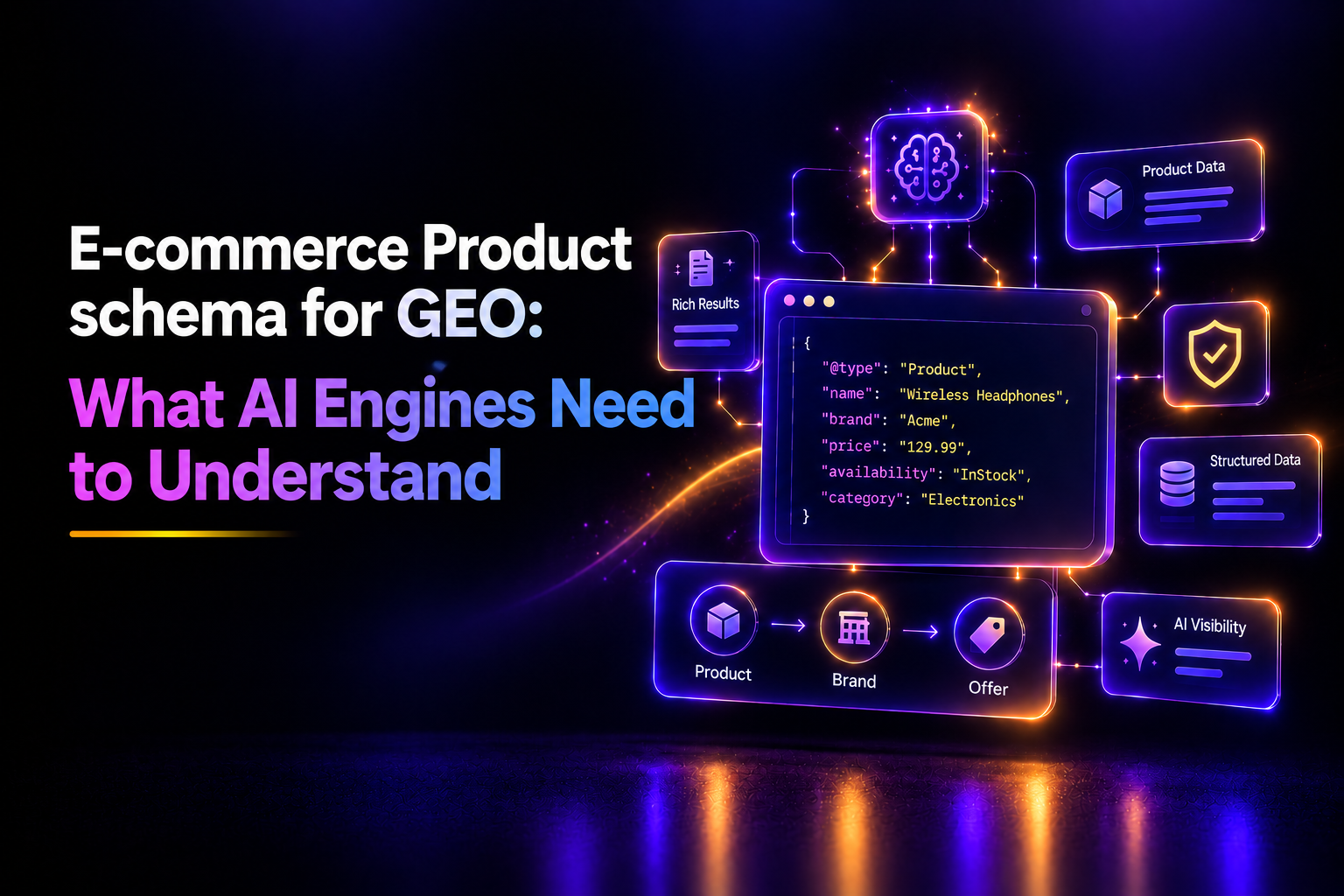
Strengthen Product Structured Data
Product structured data can provide a machine-readable representation of important product information.
Depending on the product and implementation, this can include:
- Product
- Brand
- SKU
- GTIN
- Offer
- Price
- Availability
- AggregateRating
- Review
The structured data should accurately reflect the visible page.
It should also be maintained when prices, availability, product variants or reviews change.
Schema should be treated as part of the technical information foundation rather than as a standalone AI visibility tactic.
Build Content Around Shopping Questions
AI-assisted search is not limited to product-name queries.
Brands should create useful content around the questions customers ask before purchasing.
For example, a mattress brand could publish:
- How to choose a mattress for your sleeping position
- Firm vs medium-firm mattresses
- How to choose a mattress for couples
- Mattress size guide
- How to care for a mattress
- Mattress comparison guides
These pages can provide context that a product page alone may not cover.
The same principle applies across categories.
A smartphone brand can create buying guides around battery life, camera requirements, gaming performance and phone selection by budget.
A home furnishings brand can create guides around curtain fabrics, blackout levels, washing instructions and room-specific selection.
Strengthen Reviews and Third-Party Information
AI-assisted product research can use information from sources beyond the brand’s website.
Brands should therefore maintain an active review and reputation ecosystem across relevant channels.
This includes:
- Genuine customer reviews
- Marketplace listings
- Retailer profiles
- Independent product reviews
- Publisher coverage
- Relevant comparison pages
- Consistent product information across external platforms
The objective is not to manufacture mentions.
Instead, brands should ensure that important product facts are accurate wherever customers and publishers encounter the product.
Keep Product Information Consistent
Consistency becomes increasingly important when products appear across multiple channels.
Check important attributes such as:
- Product name
- Product category
- Specifications
- Price
- Availability
- SKU
- GTIN
- Product variants
- Ratings
- Reviews
For example, if the brand website says a laptop has 16GB RAM but a marketplace listing says 8GB, shoppers and information systems may encounter conflicting information.
A regular product-information audit can identify these inconsistencies.
Monitor Platforms Separately
Finally, brands should avoid treating “AI visibility” as one universal number.
Track visibility separately across:
ChatGPT: Product mentions, recommendations, sources, citations and product representation.
Perplexity: Citations, source types, product mentions and competitor coverage.
Gemini: Product attributes, shopping visibility, merchant information and brand mentions.
Google AI Overviews: AI Overview presence, cited pages, product/category queries and changes in organic visibility.
The same query should be tested periodically to identify changes in representation.
This makes GEO measurement more actionable because it shows where visibility is changing rather than simply reporting that AI visibility increased or decreased.
Conclusion
The goal of e-commerce GEO is therefore not to optimize for one AI search engine. It is to build a clear, consistent and credible product information ecosystem that can support discovery across the different ways consumers are now researching and evaluating products.